
If you run an urgent care practice, we also help clinics with billing and revenue cycle management. See our urgent care billing services.
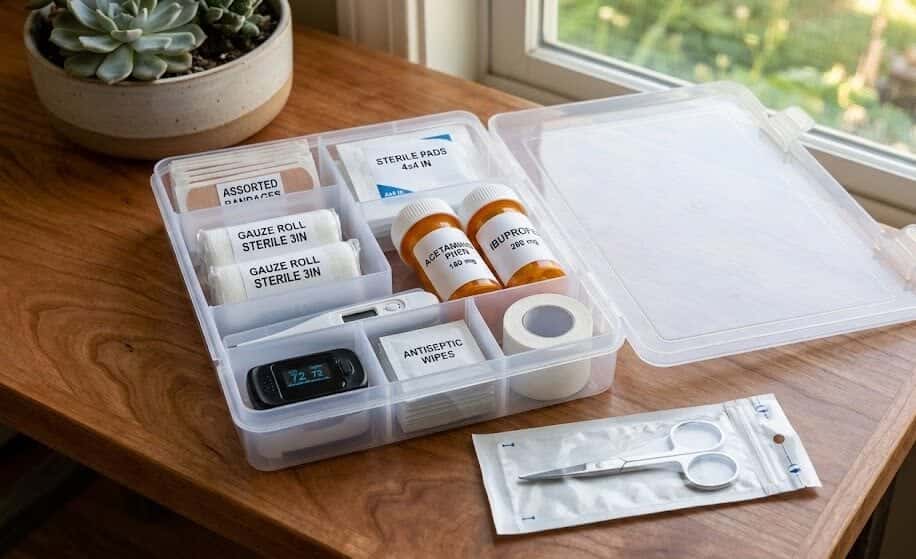
An urgent care kit is a stocked set of supplies, medication, diagnostic tools, and wound care built to manage the category of problems that would normally send you to an urgent care clinic: fevers, allergic reactions, sprains, minor infections, and stomach bugs. The kit is designed to provide care during the hours or days before you can see a healthcare provider or to serve as a substitute for a visit if the issue resolves on its own.
It's 11:40 PM. Your kid's temperature just hit 102.4°F, they've got a deep splinter from the backyard fence, and the nearest urgent care closed at 9. This is the exact moment an urgent care kit either saves you a frantic drive or a night of googling "Is this a fever emergency?" in a panic.
Done right, a kit saves you money, time, and a fair amount of 2 AM panic. Done wrong, it's either a box of expired Band-Aids or a $300 mystery kit of prescription drugs you'll never use.
What Is an Urgent Care Kit?
People use "first aid kit" and "urgent care kit" interchangeably, but they're not the same thing.
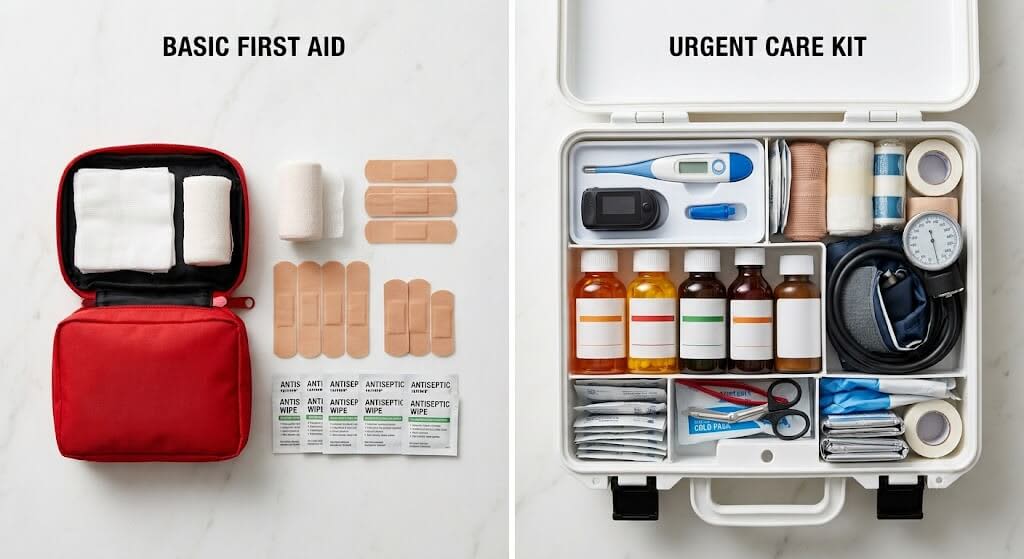
A first aid kit handles the basics: cuts, scrapes, small burns, and blisters. It's what you'd find in a glovebox or a bathroom cabinet drawer. Source: American Red Cross – Anatomy of a First Aid Kit
An urgent care kit goes further. It's built to manage the category of problems that would normally send you to an actual urgent care clinic: fevers, allergic reactions, sprains, minor infections, or stomach bugs for the hours or days before you can get seen or instead of getting seen at all if the issue resolves itself. Source: CDC – Urgent Care Center Data Brief
How Is It Different From a First Aid Kit?
Category | First Aid Kit | Urgent Care Kit | Bug-Out / Emergency Prep Kit |
Handles | Cuts, scrapes, minor burns | Fevers, allergies, sprains, mild infections | Multi-day survival, no outside help |
Contents | Bandages, antiseptic wipes | + thermometer, meds by symptom, diagnostics | + water, food, shelter, radio |
Typical cost | $10–25 | $40–100 (DIY) | $75–200 |
Best for | Every household, baseline | Households with kids, chronic conditions, or limited urgent care access | Natural disaster-prone areas |
Do You Actually Need One?
You probably need a real urgent care kit, not just a basic first aid box.
If any of these are true:
You have kids under 12 (fevers and stomach bugs hit fast and often at night)
You live more than 20 minutes from the nearest urgent care or ER.
Someone in the house has a chronic condition: asthma, severe allergies, diabetes
You travel often, especially internationally or somewhere rural.
You've had a "wish I'd had that at home" moment in the last year.
If none of those apply, a solid $15 first-aid kit plus a well-stocked medicine cabinet probably cover you. No need to overbuild.
What to Put in an Urgent Care Kit?
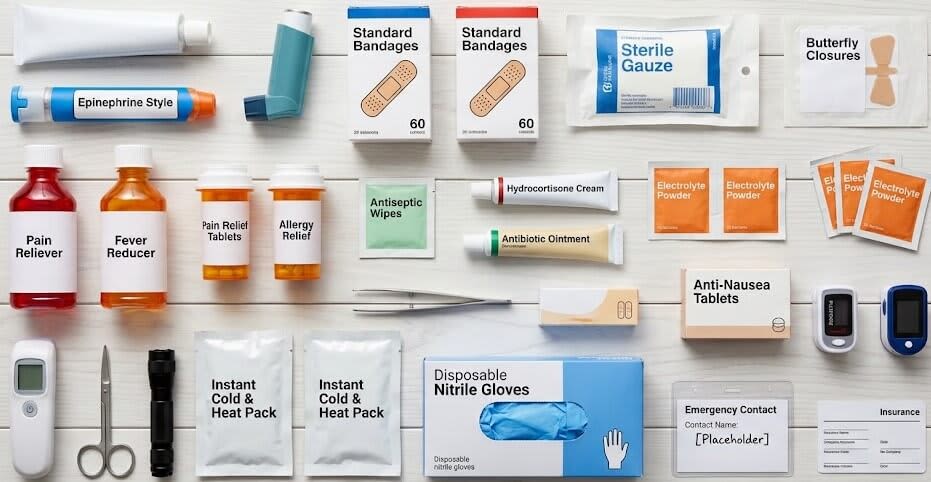
Most lists online just name items. That's not useful; gauze doesn't tell you whether you need one roll or ten. Here's what an actual kit for a family of four should hold.
Wound care
20 adhesive bandages, assorted sizes
2 rolls sterile gauze + medical tape
1 box butterfly closures (for cuts that need to stay shut but don't need stitches)
1 antiseptic solution (alcohol wipes or povidone-iodine)
1 tube antibiotic ointment
1 instant cold pack, 1 instant heat pack
1 pair fine-tip tweezers (splinters, ticks)
1 pair of small scissors
Medication (check age-appropriate dosing for each)
Acetaminophen: adult and children's liquid form
Ibuprofen: adult and children's liquid forms
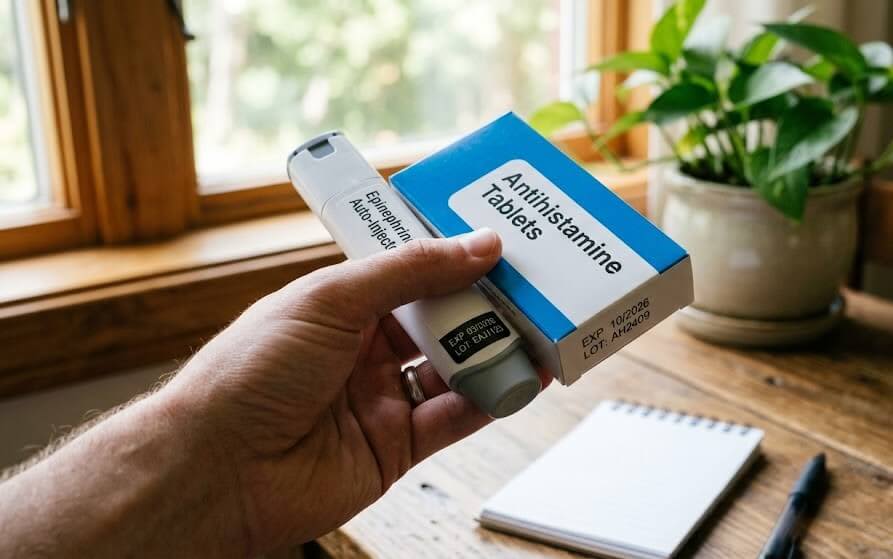
Oral antihistamine (diphenhydramine or cetirizine)
Hydrocortisone cream 1% (rashes, bites)
Oral rehydration salts or electrolyte packets (stomach bugs, dehydration)
Anti-nausea tablets
Diagnostic tools
Digital thermometer (a no-touch or ear thermometer if you have young kids)
A pulse oximeter is genuinely useful for respiratory illnesses and cheap now ($15–25).
Small flashlight (checking throats, ears, pupils)
Disposable gloves, 4–6 pairs
Chronic-condition additions (only if relevant to your household)
Backup inhaler or spacer
Epinephrine auto-injector (2-pack, check expiration every 6 months; these expire faster than most people expect)
Glucose tablets or gel, plus a backup glucometer strip supply
Paperwork that people forget
A laminated card with each family member's medications, allergies, and emergency contacts
Insurance card photocopies
The after-hours number for the pediatrician or primary care physician (PCP) should be written down, rather than just saved in a phone that might be dead.
DIY Kit vs. Pre-Made Kit vs. Prescription Kit: What's It Actually Worth?
Option | Cost | What You Get | Worth It? |
DIY, built yourself | $40–80 | Exactly what your household needs, nothing you won't use | Best value for most people |
Mid-tier pre-made kit | $80–120 | Convenience, decent default contents | Good if you want a fast start, then customize |
Prescription urgent care kit | $250–300 | Antibiotics, antiparasitics, no doctor visit required | Only for genuinely remote living, extended off-grid travel, or after discussing it with your own doctor |
The honest take on the prescription kits: they solve a real problem for a narrow group of people: off-grid travelers, remote property owners, people prepping for supply-chain disruption. For most households, they introduce a bigger issue than they solve, since taking antibiotics without a diagnosis can mask a more serious condition or contribute to antibiotic resistance, a growing public health concern on its own. Source: CDC – Antibiotic Resistance FAQs
If that's the category you're considering, it's worth a conversation with your own doctor about what you'd actually need on hand, rather than a pre-set list of drugs chosen for the general public.
For everyone else, the DIY route wins on cost and is actually used, because it's built around your specific household rather than a hypothetical one.
When Your Kit Isn't Enough
A kit buys you time. It doesn't replace a diagnosis. For symptom-specific guidance beyond this table, MedlinePlus's emergency symptom guide is a reliable reference to bookmark alongside your kit. Source: MedlinePlus emergency symptoms guide
Symptom | Home Kit Is Fine | See Urgent Care | Go to ER / Call 911 |
Fever | Under 102°F, alert and drinking fluids | Over 102°F for 24+ hrs, or any fever in infant under 3 months | Fever with stiff neck, rash, or confusion |
Cut | Small, stops bleeding with pressure | Won't stop bleeding after 10 min of direct pressure, or gaping | Spurting blood, deep wound near joint/artery |
Allergic reaction | Mild rash or hives, no breathing trouble | Widespread hives, mild swelling | Throat swelling, trouble breathing, dizziness — use epinephrine and call 911 |
Sprain | Mild swelling, can bear some weight | Can't bear weight at all, significant swelling | Visible deformity, numbness |
Stomach bug | Mild, staying hydrated | Vomiting/diarrhea over 24 hrs, signs of dehydration | Blood in vomit or stool, severe abdominal pain |
If you're ever unsure which column you're in, treat it as the more serious one. A kit helps you act fast on clear cases; it isn't there to talk you out of the ones that need a professional.
Kit Variations by Household
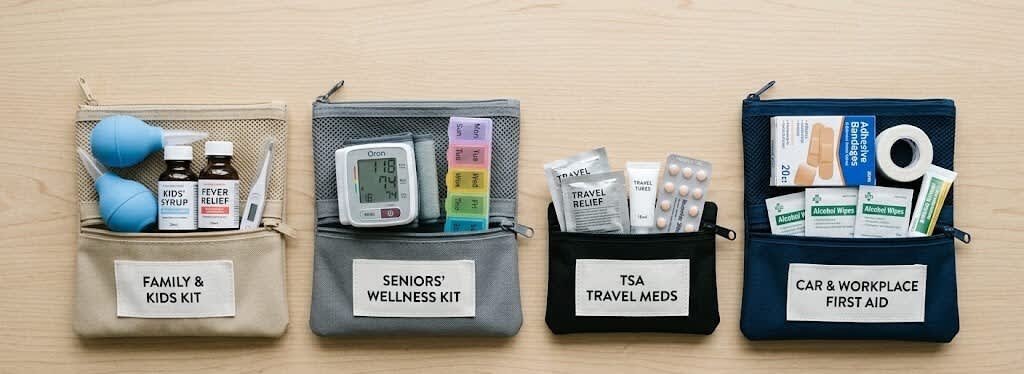
Family with young kids: add a nasal aspirator, children's-dose everything, a rectal or ear thermometer, and a laminated card with weight-based dosing charts; dosing by age alone is often wrong once a kid is bigger or smaller than average.
Seniors or chronic conditions: add a blood pressure cuff, a pill organizer with a spare week of maintenance meds, and a list of current prescriptions with dosages. EMTs ask for this immediately, and it saves critical minutes.
Travel version: downsize to a TSA-compliant pouch; 3.4 oz liquid limits apply to liquid meds, so favor tablets and single-dose packets. Add a printed prescription list in case you need an emergency refill abroad.
Car or workplace kit: skip anything heat-sensitive (liquid meds and some ointments degrade in a hot trunk) and prioritize wound care, the most common need in these settings.
Keeping Your Kit Ready
Set a recurring reminder every 6 months to:
Check every expiration date; epinephrine auto-injectors and liquid medications expire fastest, often within a year.
Restock anything used since the last check.
Update the medication/allergy card if anyone's prescriptions changed.
Confirm that every family member still knows where the kit is kept.
A kit that's never checked is worse than no kit; it gives you false confidence right when you need it most.
What's the difference between a first aid kit and an urgent care kit?
A first aid kit handles minor cuts and scrapes. An urgent care kit adds diagnostic tools like a thermometer and pulse oximeter, a broader medication set, and supplies for fevers, allergic reactions, and sprains.
Should I include prescription medications in my kit?
Only medications already prescribed to a family member for an ongoing condition, like an epinephrine auto-injector or rescue inhaler clearly labeled with dosage. Adding prescription antibiotics you weren't individually prescribed isn't recommended without talking to your doctor first.
Is the $299 Urgent Care Kit sold on TV worth it?
For most households, no, a DIY kit covers the same practical needs for $40–80. The prescription version makes more sense for people who are genuinely far from medical care regularly, and even then, it's worth discussing with your own doctor first.
How often should I check my urgent care kit?
Every six months. Set a recurring calendar reminder; expired epinephrine and liquid medications are the most common things people find too late.
Can I build an urgent care kit from scratch?
Yes, and it's usually the better option. Start with the wound care and medication basics above, then add anything specific to your household chronic conditions, kids' ages, or travel habits.
How much does a basic urgent care kit cost?
A DIY kit for a family of four typically costs $40–80, covering wound care, fever and allergy medication, and basic diagnostic tools like a thermometer and pulse oximeter.
Related Posts

Ophthalmology Medical Billing Services: Costs, Coding Pitfalls, and How to Choose the Right Partner

Oncology Billing Services: How They Work, What The Cost Is, and How to Choose the Right Partner in 2026

What Are Community Rehabilitation Companies? A Complete US Guide to Types, Funding & Billing
Comments (0)
Comments are disabled for this post.