

Learn what community rehabilitation companies are, the main types in the US, how they’re funded, and the billing challenges they face.
Community rehabilitation companies help people with disabilities live, work, and recover outside institutional settings. Some focus on employment and job coaching. Others provide grassroots, non-medical support in homes and community spaces. Still others provide outpatient therapy, such as PT, OT, and ST.
Each type serves a different population and runs on its own funding model, from state contracts to Medicaid waivers to commercial insurance. Referring providers, families, and payers all need clarity on which model applies before choosing a partner.
What Does Community Rehabilitation Company Actually Mean?
There's no single definition. The term shifts depending on the country, the funding source, and the population served. Understanding which meaning applies to you saves time and prevents confusion.
The Three US Definitions of Community Rehabilitation
In the United States, "community rehabilitation" splits into three distinct categories. Each has its own funding structure, regulations, and target population.
Vocational/employment CRPs: Agencies that help people with disabilities find and keep jobs.
Community-Based Rehabilitation (CBR): Grassroots, non-medical programs supporting independence.
Outpatient and home-based therapy providers: PT, OT, and ST delivered outside a hospital setting.
Knowing which category applies to your organization determines everything else, from compliance requirements to billing workflows.
Types of Community Rehabilitation Companies in the US
Each type of community rehabilitation company operates differently. Here's what sets them apart.
Vocational Rehabilitation Providers (CRPs)
Community Rehabilitation Providers, or CRPs, focus on employment outcomes. They offer job coaching, supported employment, and sometimes sheltered workshop placements. Most CRPs contract directly with state vocational rehabilitation agencies. School systems also partner with CRPs to prepare students with disabilities for the workforce. Their success is measured in placements, retention, and wage growth, not clinical recovery.
Many CRPs also run pre-employment transition services for younger clients still in school. These programs introduce job skills early, before a student ever applies for work. CRPs typically employ job coaches, employment specialists, and case managers rather than clinicians.

Community-Based Rehabilitation (CBR) Programs
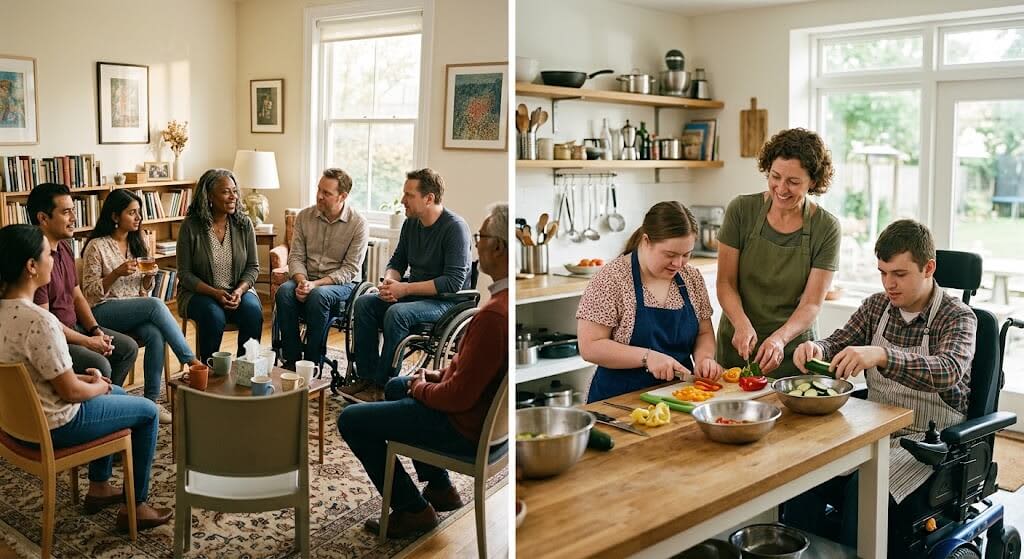
CBR programs take a grassroots approach to disability support. They operate in homes, drop-in centers, and community spaces rather than clinics. Leadership often includes people with disabilities themselves, along with families and local advocates. CBR programs serve a wide range of conditions, from autism and intellectual disabilities to substance use and traumatic brain injury.
Day habilitation programs, which support daily living and social skills, often fall under this category too. Their strength lies in flexibility and cultural relevance, especially in underserved or rural areas.
Outpatient and Home-Based Therapy Providers
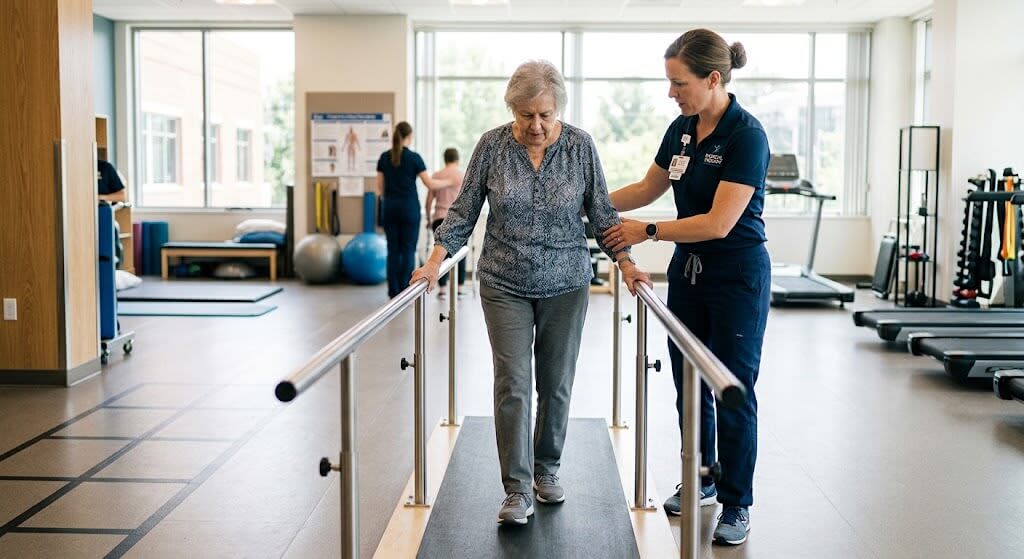
This category looks the most like traditional healthcare. These companies deliver physical, occupational, and speech therapy in clinics or patients' homes. Many patients arrive here after discharge from an inpatient rehabilitation facility. Others come with chronic conditions that never required hospitalization. This is where community rehabilitation intersects most directly with billable medical services, closely tied to rehabilitative medicine billing for PT, OT, and ST practices.
Staff typically include licensed therapists, therapy assistants, and front-office billing teams. Documentation here follows medical necessity standards, closer to a traditional outpatient clinic than a vocational program.
How Community Rehabilitation Companies Are Funded
Funding varies sharply across the three categories, and that variation shapes how billing teams operate.
State Vocational Rehabilitation Contracts
Vocational CRPs typically get paid through state VR agency contracts. Many of these contracts use performance-based payment models. That means reimbursement depends on job placement and retention milestones, not sessions delivered. Missing a milestone can mean missing a payment entirely. Source: Rehabilitation Services Administration
Medicaid HCBS Waivers
Community-based programs often rely on Medicaid Home and Community-Based Services waivers. Each state runs its own waiver program with unique eligibility rules. Authorization periods must be tracked carefully, since services delivered outside an approved window are typically not reimbursed. Source: Medicaid.gov
CARF Accreditation & Compliance Requirements
Many payers require CARF accreditation before they'll fund a community rehabilitation provider. This accreditation confirms the organization meets quality and safety standards. Losing accreditation can cut off funding streams overnight, making ongoing compliance non-negotiable. Source: CARF International
Billing & Revenue Cycle Challenges Unique to Community Rehabilitation
This is where most community rehabilitation companies struggle the most, and where guidance is hardest to find. Strong medical billing and revenue cycle management practices make the difference between steady cash flow and constant denials.
Multi-Program, Multi-Payer Billing Complexity
A single organization might bill state VR contracts, Medicaid waivers, and commercial insurance at the same time. Each payer has its own rules, timelines, and documentation formats. Staff needs to track which client falls under which funding stream, often simultaneously.
Documentation for Medical Necessity vs. Vocational Outcomes
Medical payers want proof of clinical necessity. Vocational payers want proof of job-related progress. A single client receiving both types of services needs two separate documentation trails. Blending them is one of the most common compliance mistakes.
Common Denial Triggers
Certain errors show up again and again in community rehabilitation billing:
Expired or missing authorization renewals
Incorrect program-level coding for vocational vs. therapy services
Services billed outside an approved Medicaid waiver period
Documentation that doesn't match the payer's required outcome type
Catching these before submission prevents costly delays and appeals.
How to Choose the Right Community Rehabilitation Partner
Whether you're a payer, a family, or a referring provider, funding stability matters as much as clinical quality.
Questions to Ask About Funding Stability
Ask how the organization diversifies its funding sources. A provider relying on a single contract carries more risk. Ask about their history with authorization renewals and waiver compliance. A track record of on-time renewals signals a well-run billing operation behind the scenes.
Signs of Strong Compliance & Billing Practices
Look for current CARF accreditation and low claim denial rates. Strong providers can explain their billing process clearly, without vague answers. Transparent reporting on outcomes and funding usage is another good sign. Ask for a sample of their denial rate trends over the past year if possible.

What's the difference between a CRP and a CRC?
A CRP, or Community Rehabilitation Provider, is the term most commonly used in the US for vocational and employment support agencies. CRC, or Community Rehabilitation Company, is often used interchangeably, though CRP is the more standard term in state contracts and accreditation documents.
What is CARF accreditation, and why does it matter?
CARF accreditation verifies that a rehabilitation provider meets recognized quality and safety standards. Many state and federal payers require it before approving funding.
How do community rehabilitation companies bill for services?
Billing depends on the funding source, whether that's a state VR contract, a Medicaid waiver, or commercial insurance. Each requires its own documentation, authorization, and coding process.
What is the AbilityOne Program?
AbilityOne is a federal program that connects government contracts with organizations employing people who are blind or have significant disabilities. It's a separate funding stream from state VR contracts or Medicaid waivers.
Can one organization operate as more than one type of community rehabilitation company?
Yes, many organizations run vocational, CBR, and outpatient therapy programs together. This adds value for clients but multiplies billing and compliance complexity.
Final Thoughts
Community rehabilitation companies fill a critical gap for people with disabilities across the US. Vocational CRPs, CBR programs, and outpatient therapy providers each serve different needs, but all face complex, high-stakes billing environments. Getting funding and documentation right isn't optional. It determines whether these essential services can keep running.
Organizations that treat billing as an afterthought often struggle with cash flow, denied claims, and compliance risk. Those that build strong billing processes early tend to grow faster and serve more clients. Whether you run one of these programs or refer clients to one, understanding these funding models helps you make better decisions.
If your organization needs help untangling multi-payer billing, get a free billing audit to see where revenue is being lost.
Related Posts

Gastroenterology Billing Services: Coding Accuracy, Denial Prevention, and Payer Rules That Affect Reimbursement

Family Practice Billing Services: The Real Numbers Behind Your Revenue

Anesthesia Medical Billing Services: The Complete Guide to Billing, Coding, and Outsourcing
Comments (0)
Comments are disabled for this post.